
Understanding the performance of your ads is key to successful marketing. The Facebook Data Assistant is a valuable tool that gives you insights into your ad performance, covering aspects like clicks, impressions, and conversions. It also allows you to add UTM parameters for tracking ad traffic sources, helping you pinpoint your most effective campaigns. This guide provides a straightforward walkthrough for setting up the Facebook Data Assistant in your Shoplazza admin.
Installing the Facebook Data Assistant App
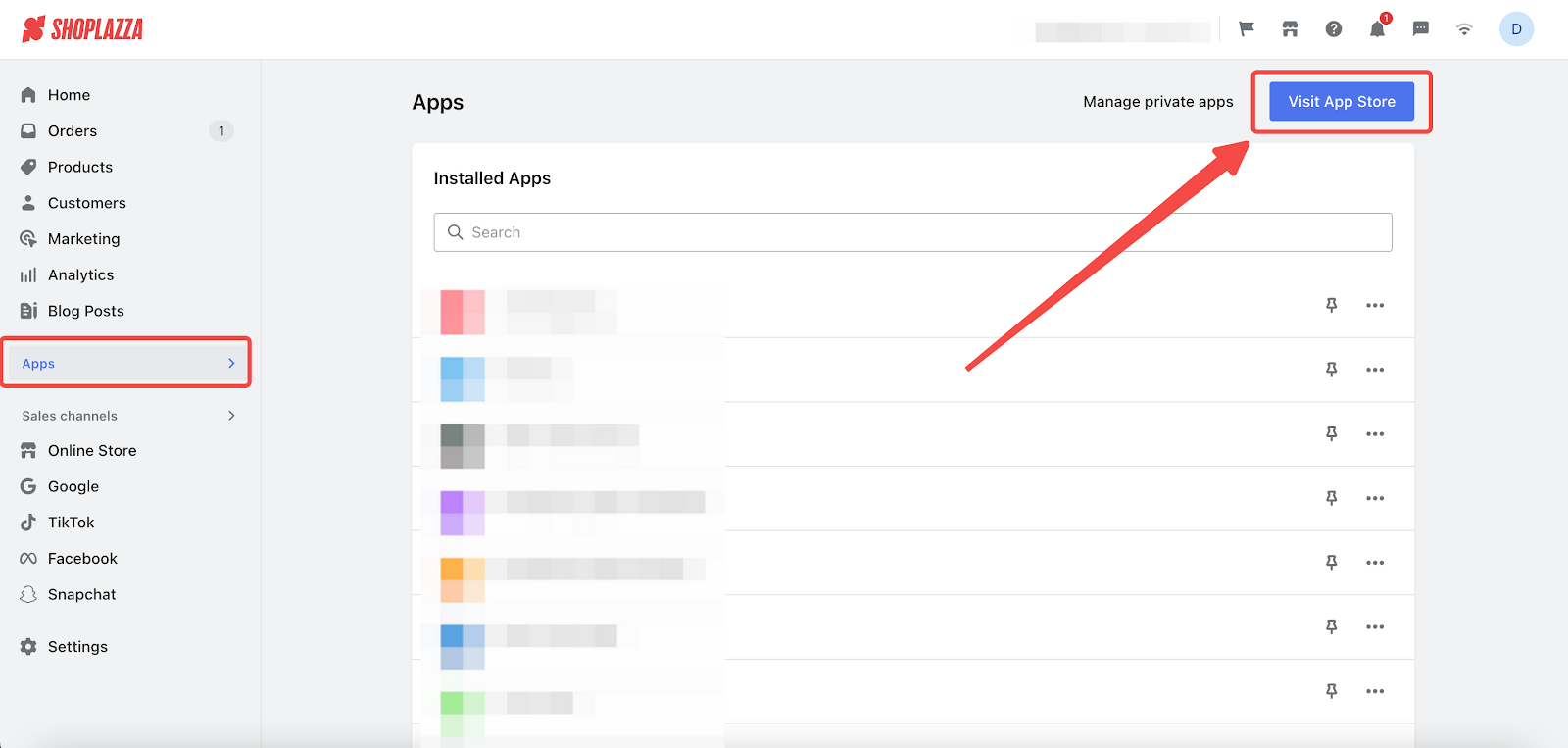
1. From your Shoplazza admin > Apps, click Visit App Store.
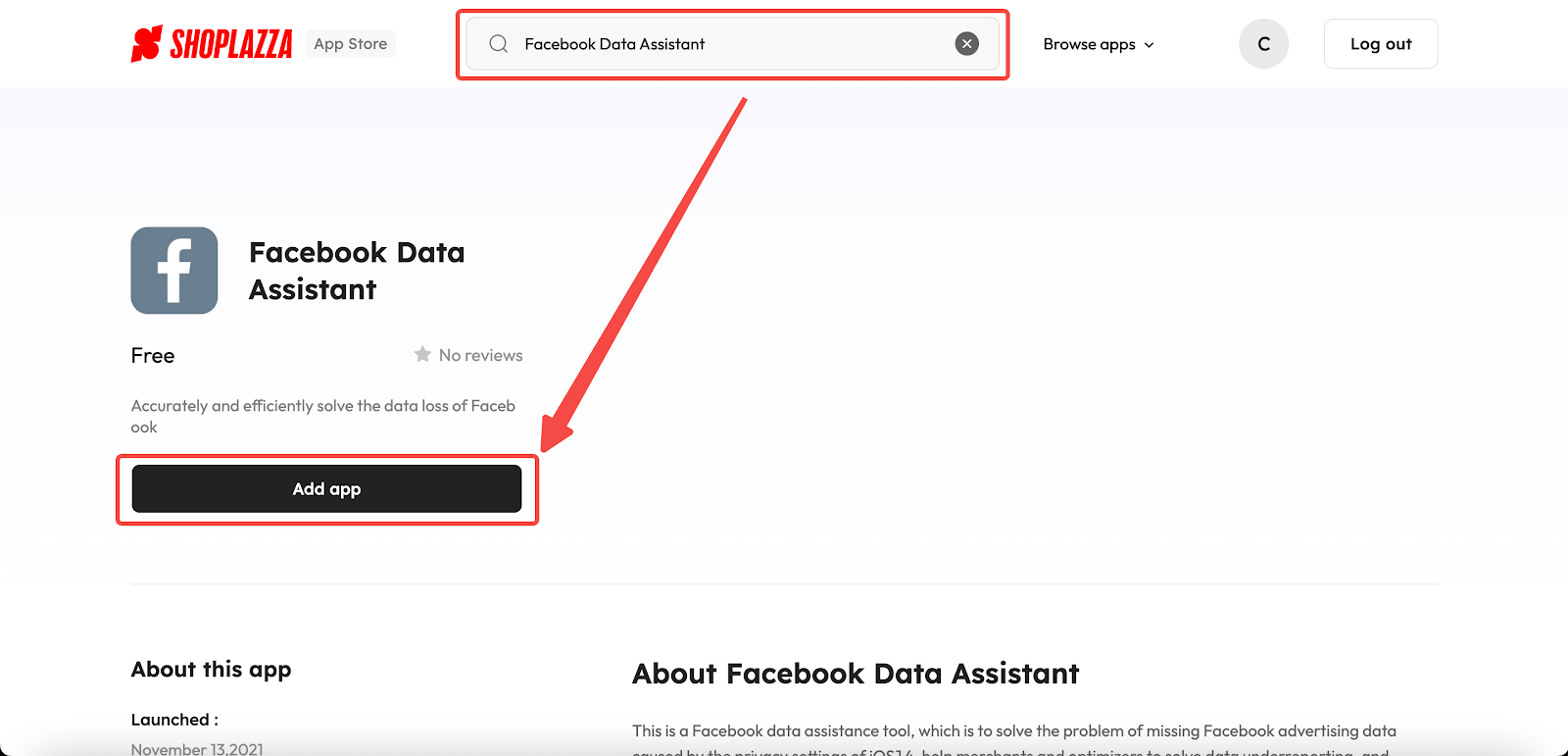
2. Search the Facebook data assistant app and click Add app to your store.
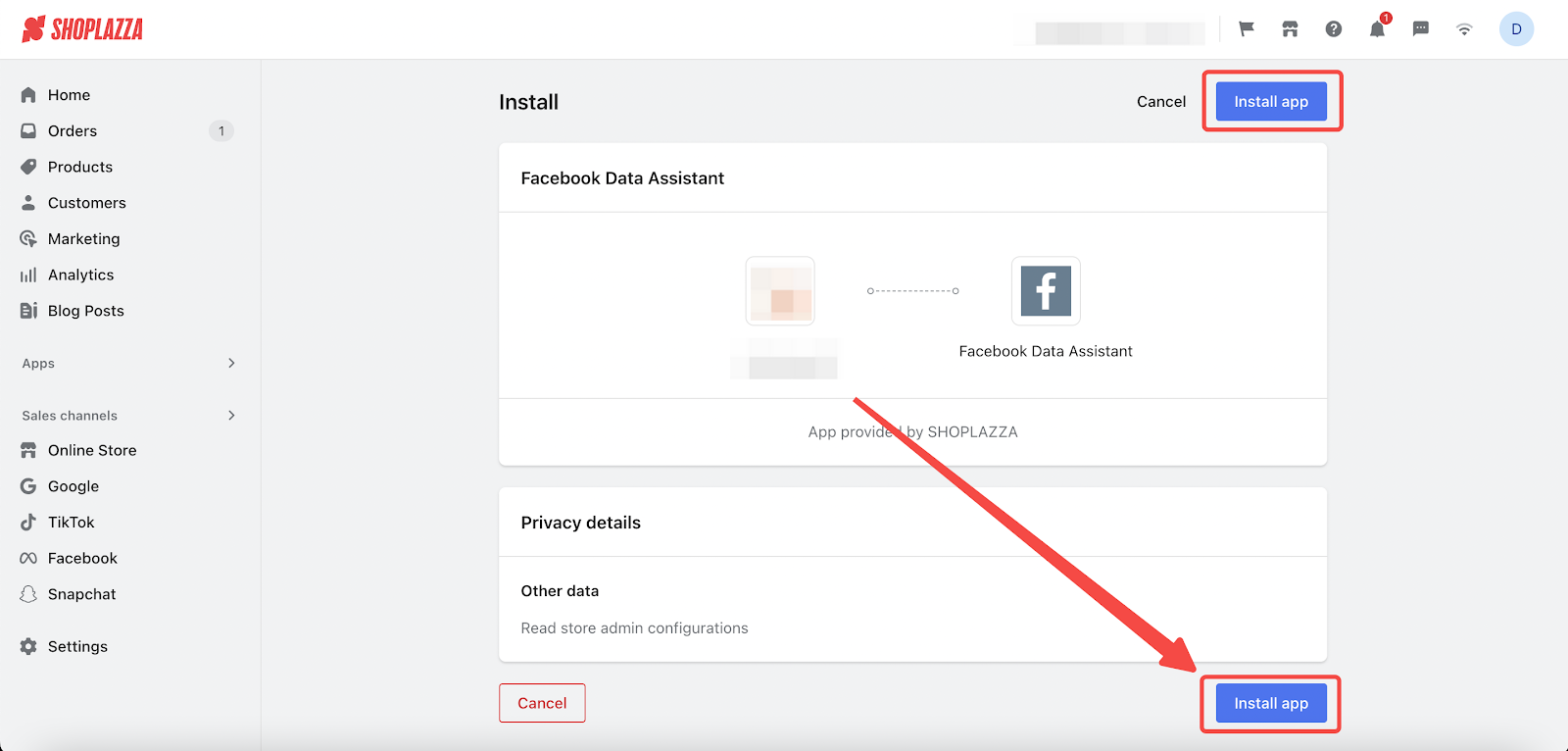
3. Click Install app.
Link your Facebook Ads account
Start by linking your Facebook account and ensuring the time zone matches your account.
1. Click the Link button.
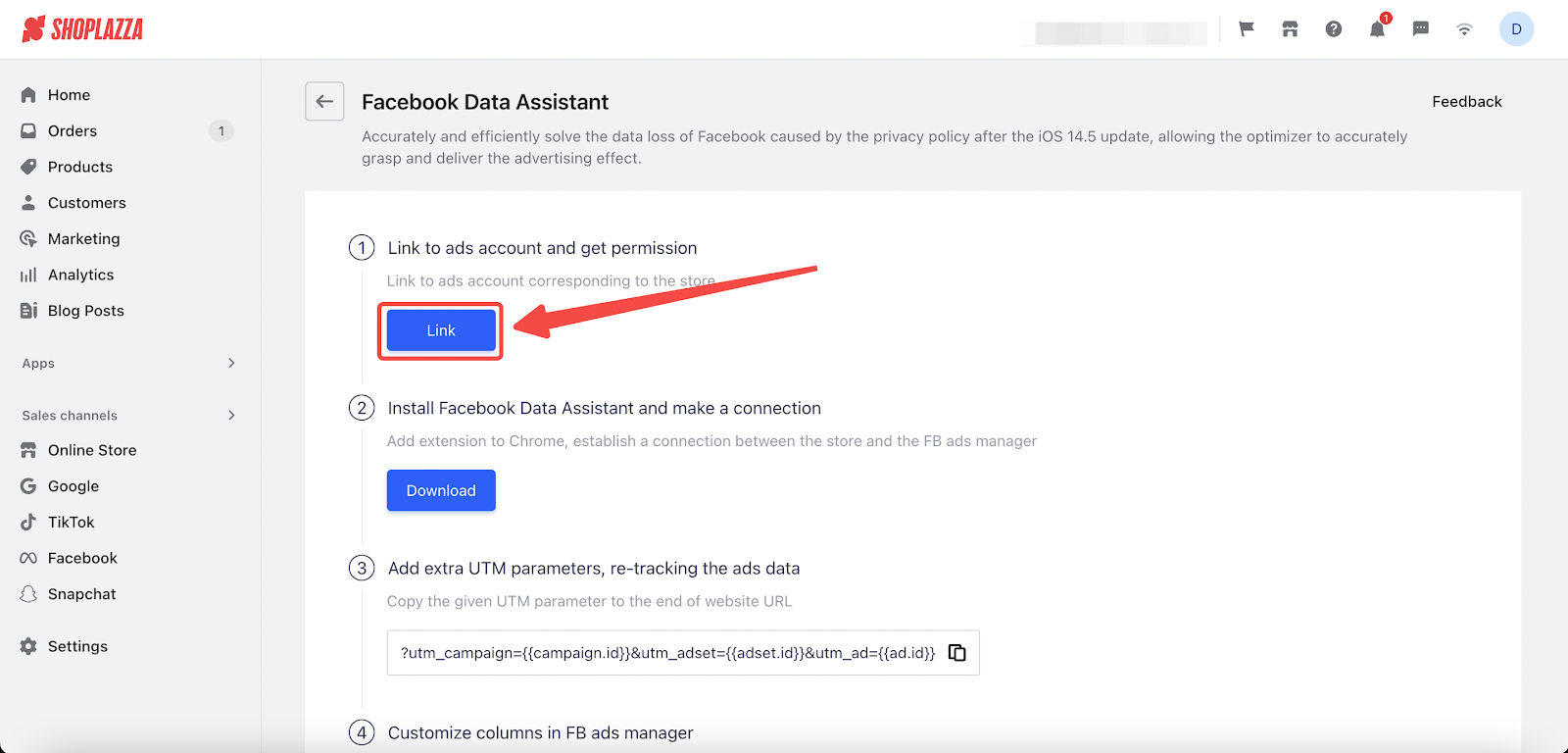
2. Here you will enter the ad account ID in the pop-up window and select the account time zone. Click here to learn how you can access your Ad account ID and Time Zone. Once done, click Confirm.
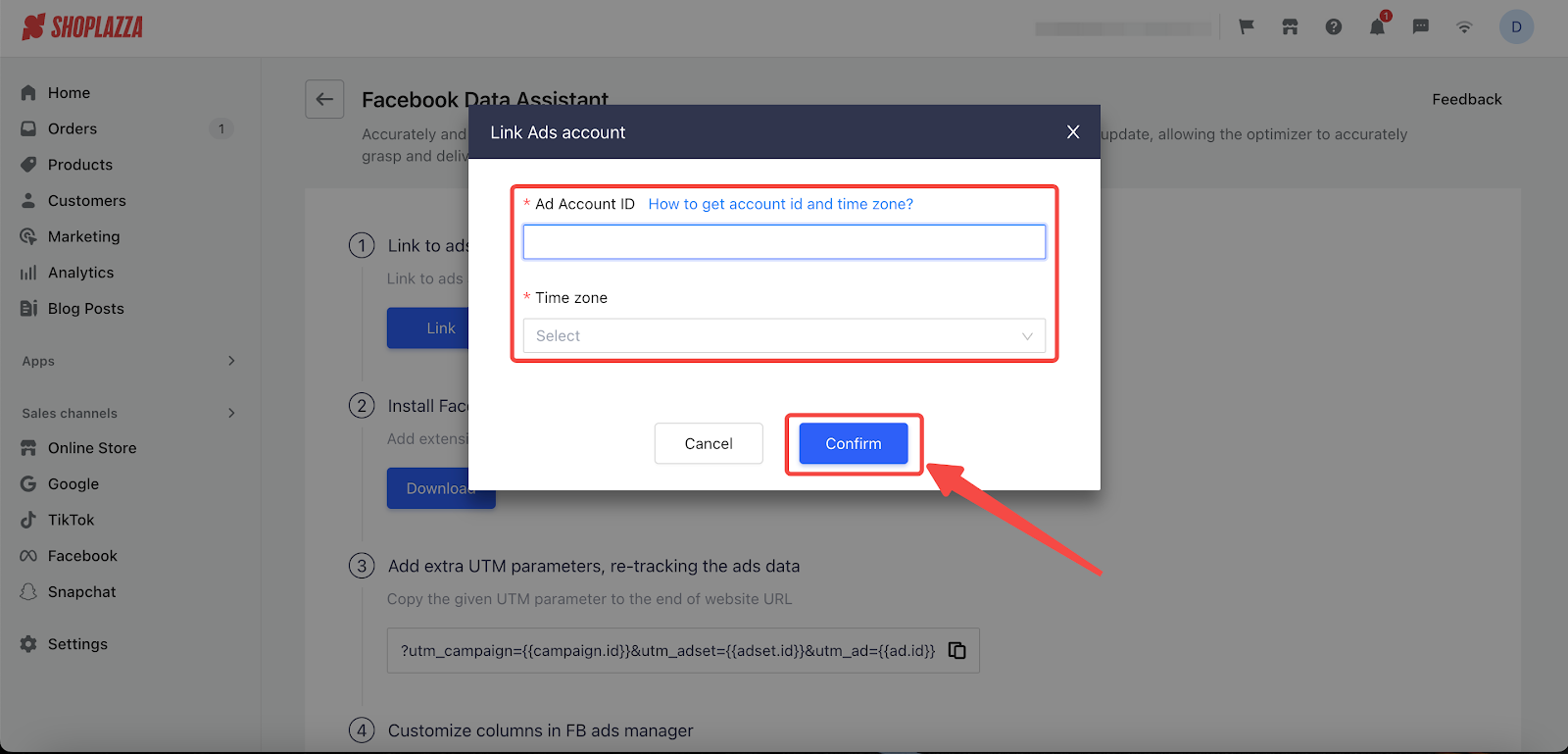
Note
The time zone should align with your ad account to sync store order data correctly.
Installing the Facebook Data assistant extension
The next step is to install an extension in Chrome/Microsoft edge to create a connection between your store and Facebook ad manager.
1. Once your Ads account is linked, click Download to get the fb_data_assistant.zip file.
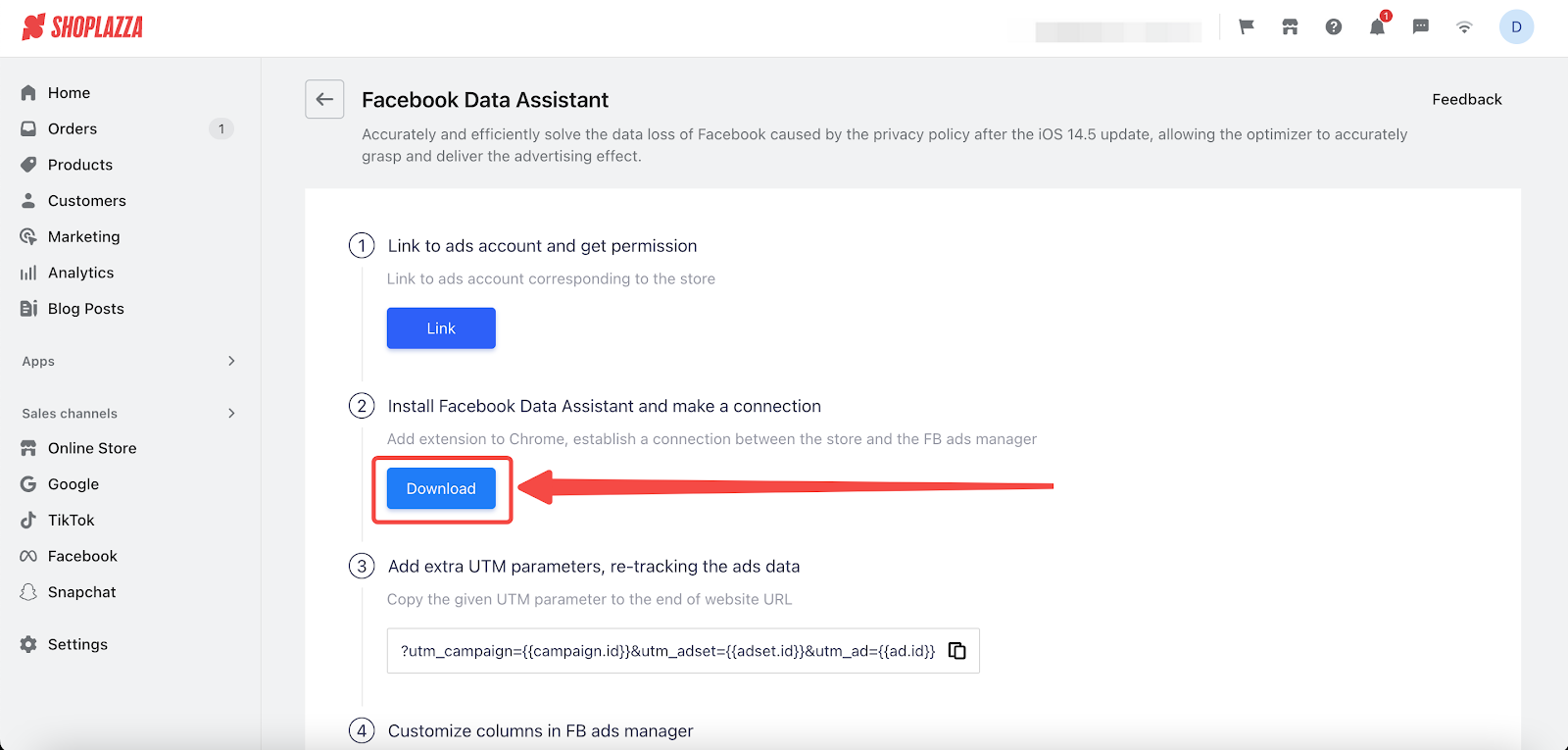
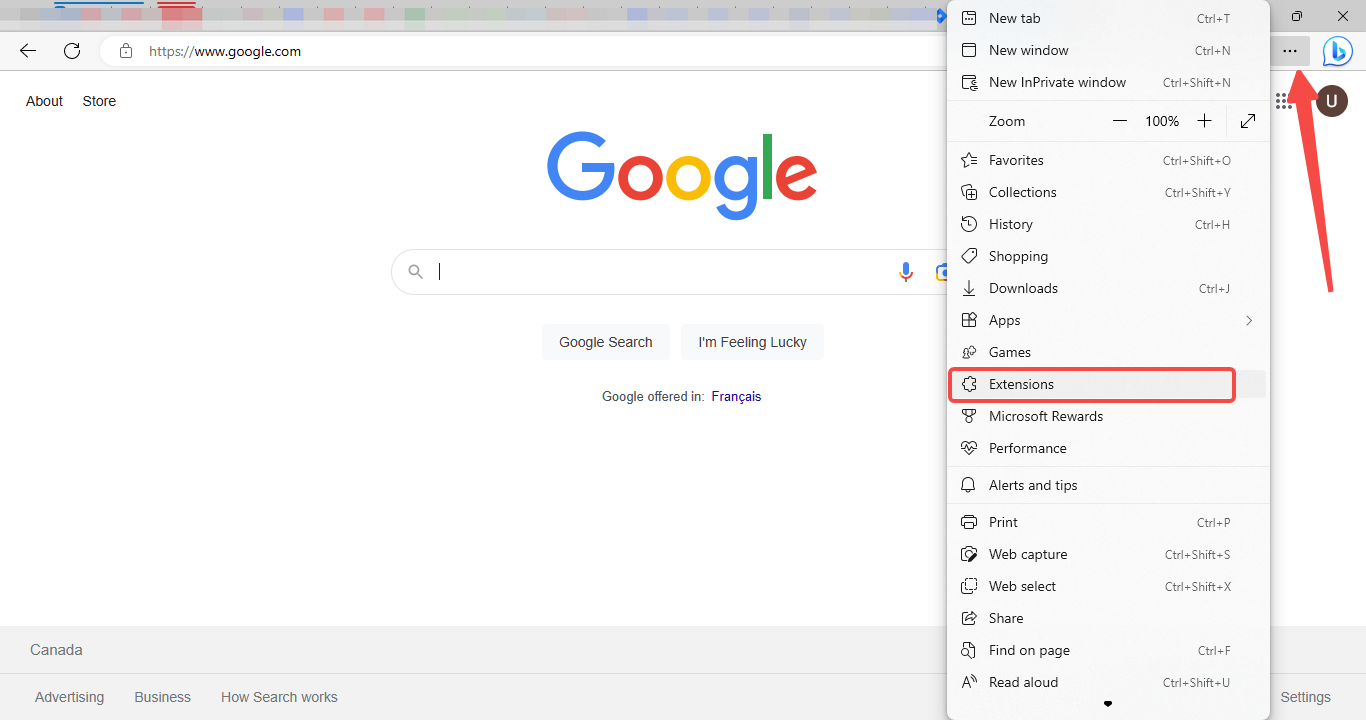
2. Open your Microsoft Edge or Chrome browser and go to Manage Extension.

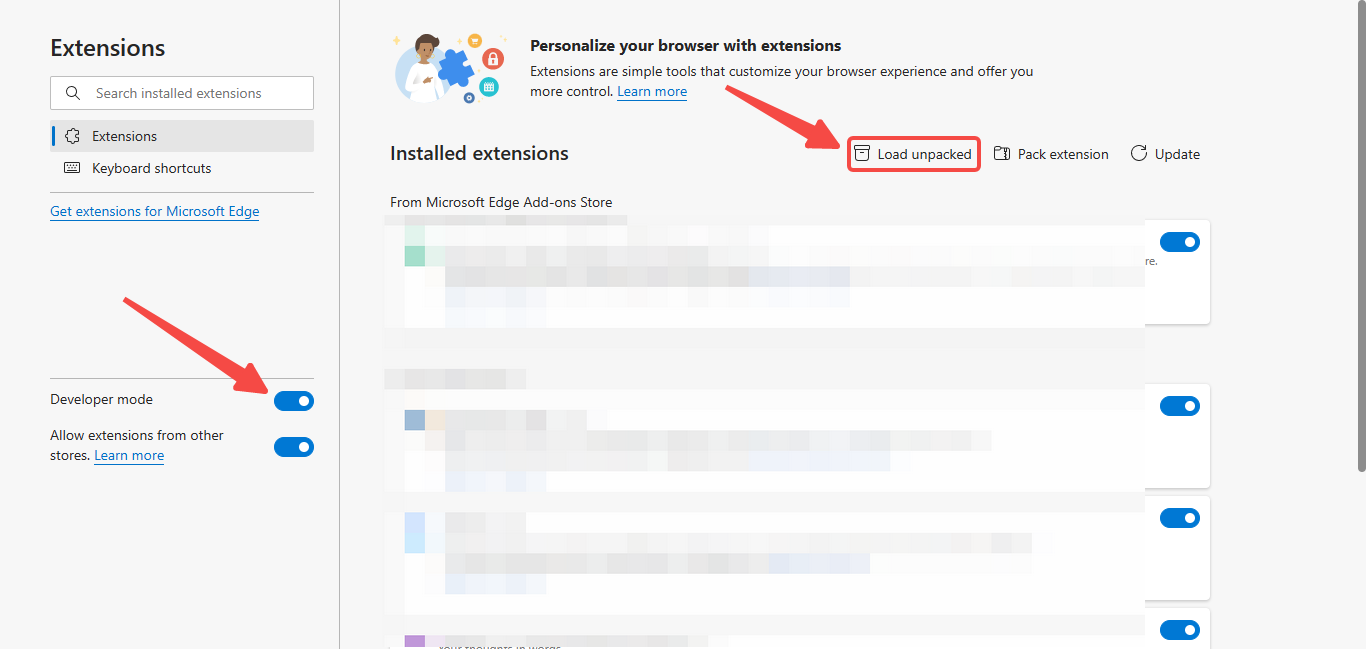
3. Turn on Developer mode and click Load unpacked.
4. Select the zip file previously downloaded.
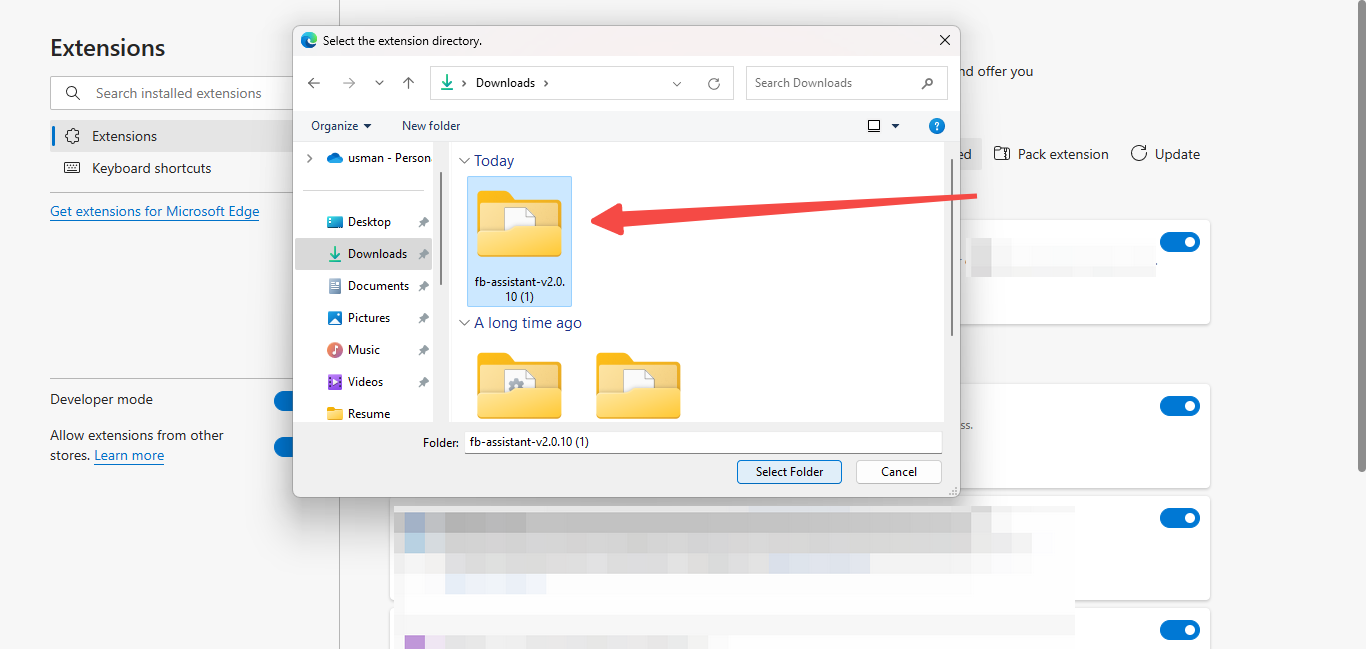
5. Confirm the file in the extension list to make sure the upload is successful.
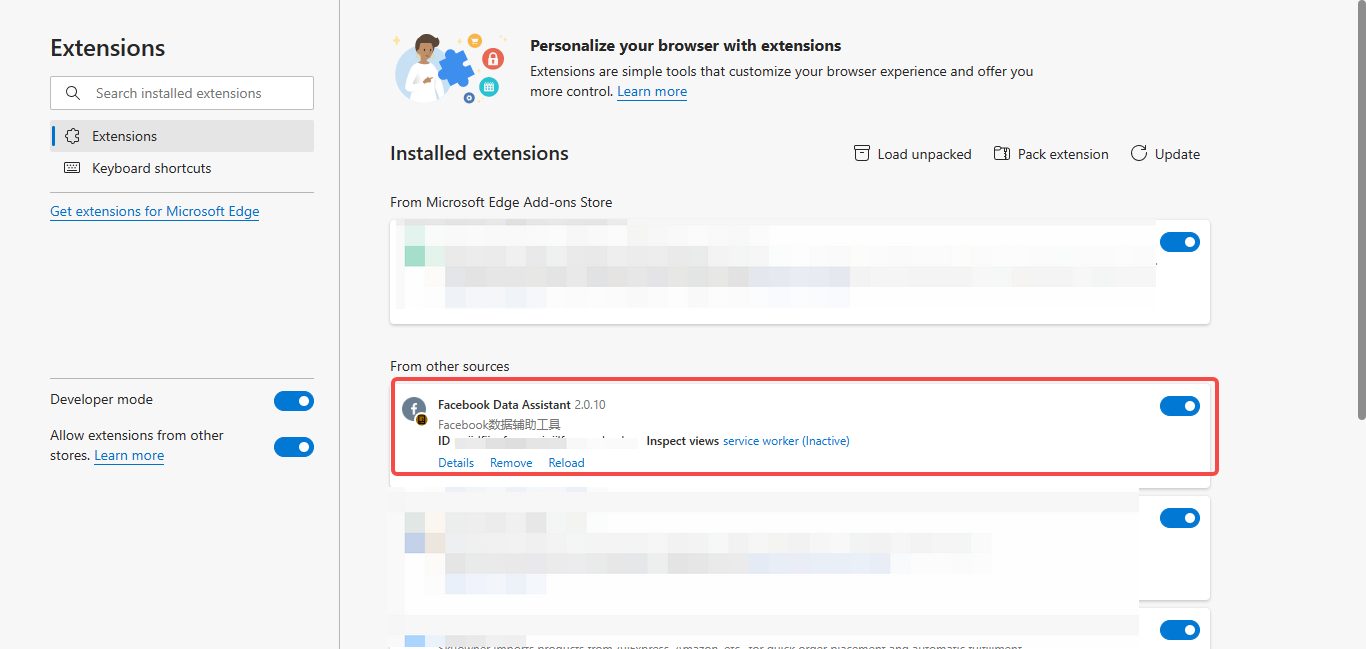
6. Activate the extension for data reporting.

Note
The extension is effective only on the Facebook Ad Manager page.
Adding extra UTM parameters, re-tracking the ads data
With the assistant installed, you can now add UTM parameters.
1. Click to copy the UTM parameter.
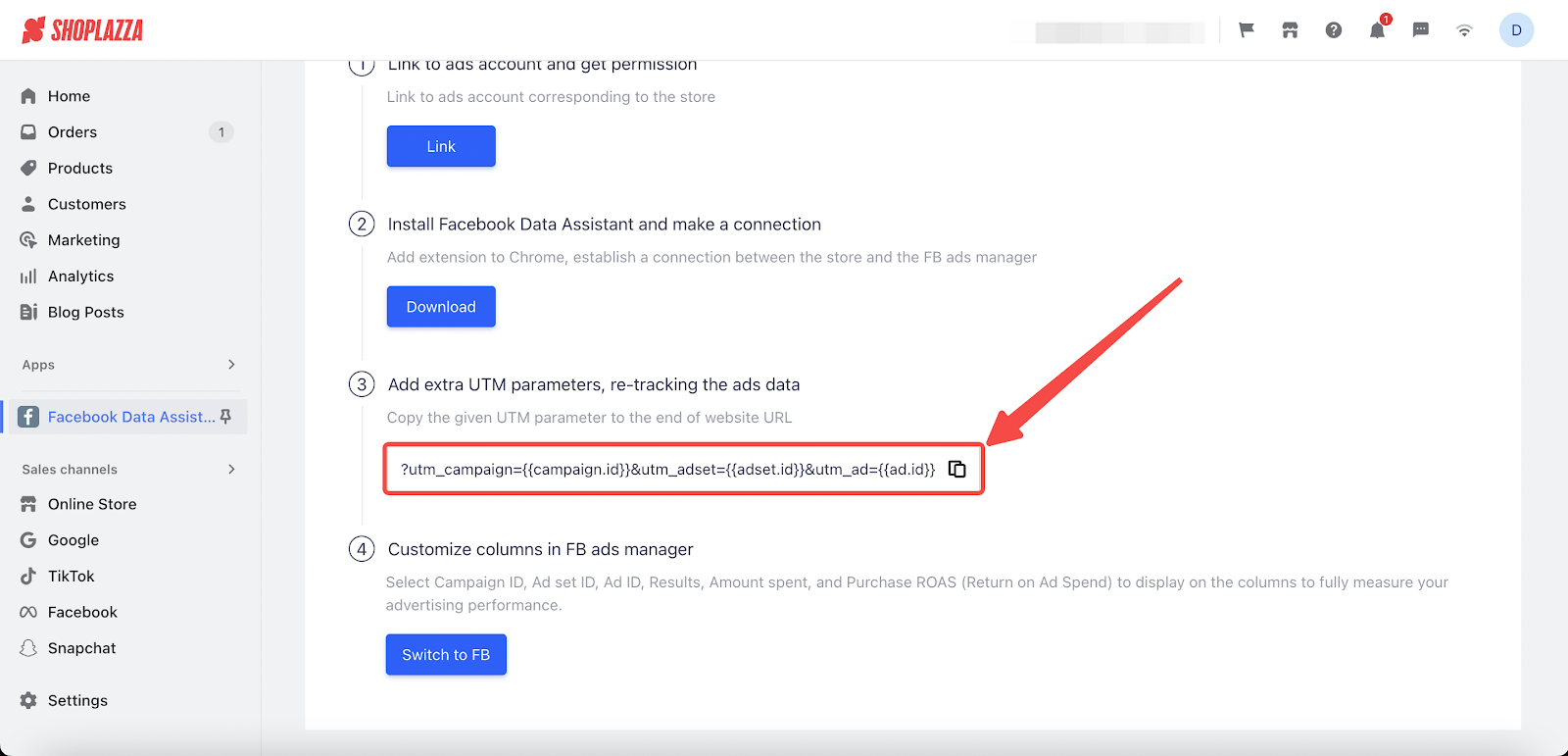
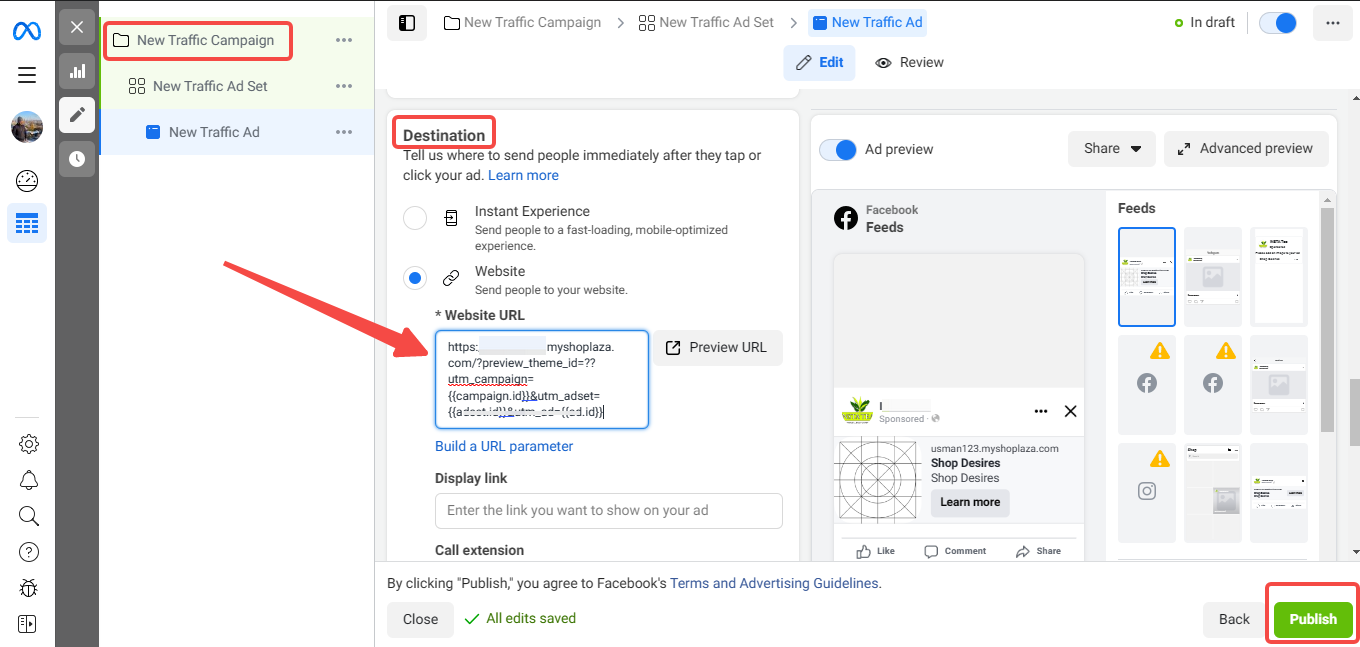
2. Log in to your Facebook Ad manager account, select the Ad type and paste the UTM parameter to the end of the website URL. Click Publish to save the settings.
Customizing columns for accurate advertising data
The last step in setting up Facebook Data Assistant is customizing columns.
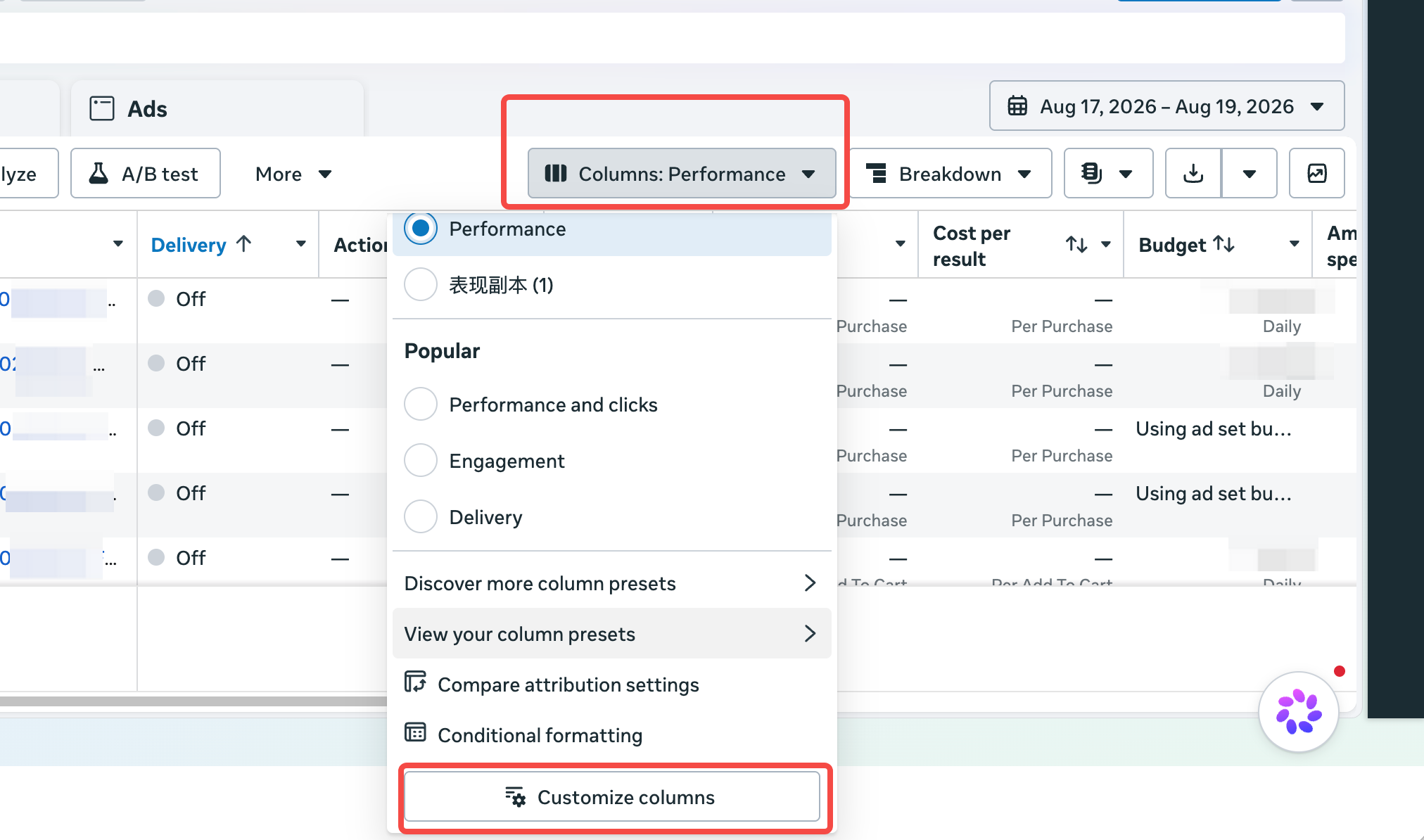
1. Log in to your Facebook Ads Manager. Under Campaigns, click Columns in the top-right corner of the reporting table, then select Customize columns.
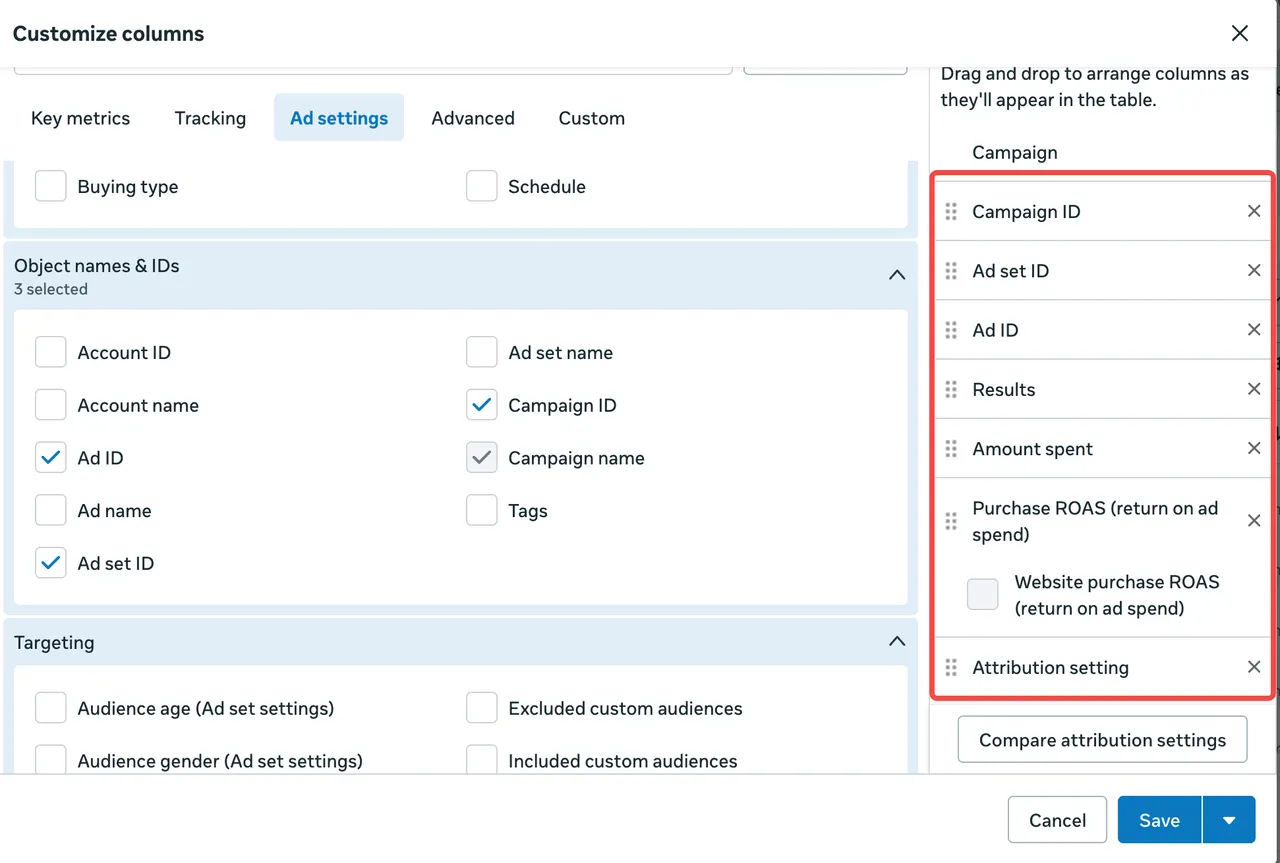
2. In the Customize columns window, select the following metrics:
- Key Metrics
- Results
- Amount spent
- Purchase ROAS (return on ad spend)
- Ad Settings
- Object names & IDs
- Campaign ID
- Ad set ID
- Ad ID
- Attribution setting
Once selected, click Apply.
3. Arrange the column order as shown below, and make sure the key columns always stay within the visible area of the page(not covered by other elements, and visible without scrolling horizontally).
Note
Facebook Ads Manager only renders the content currently inside the visible area. If a key column is covered or scrolled out of view, the corresponding data module is unloaded, and the data cannot be read (it will appear empty or missing). Column order and visibility are therefore required settings and cannot be skipped.
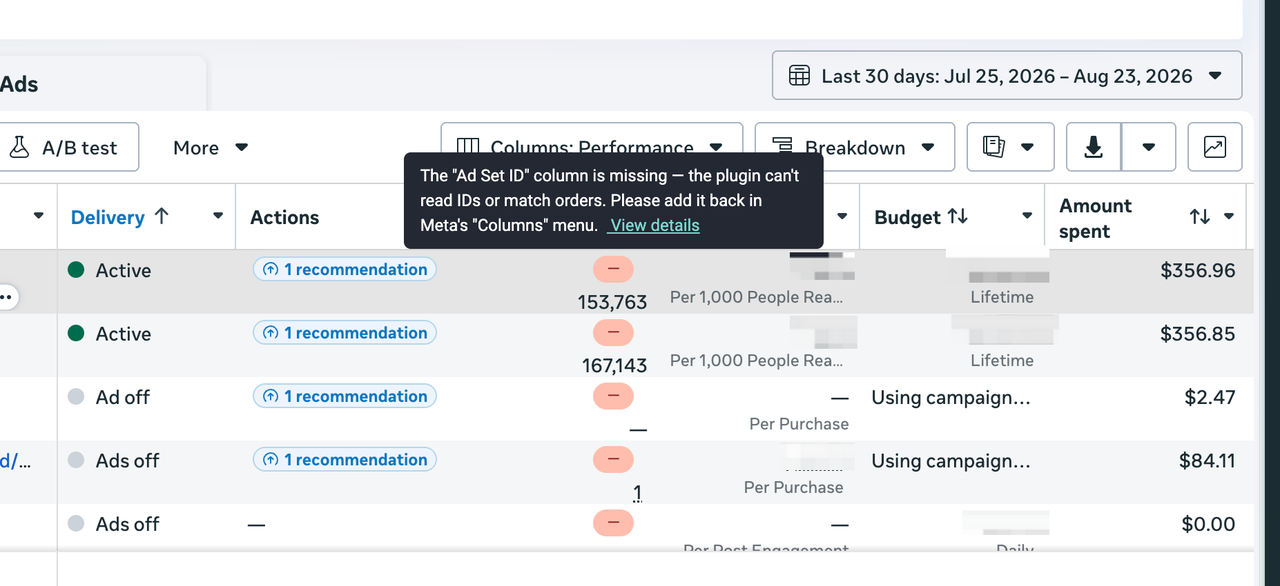
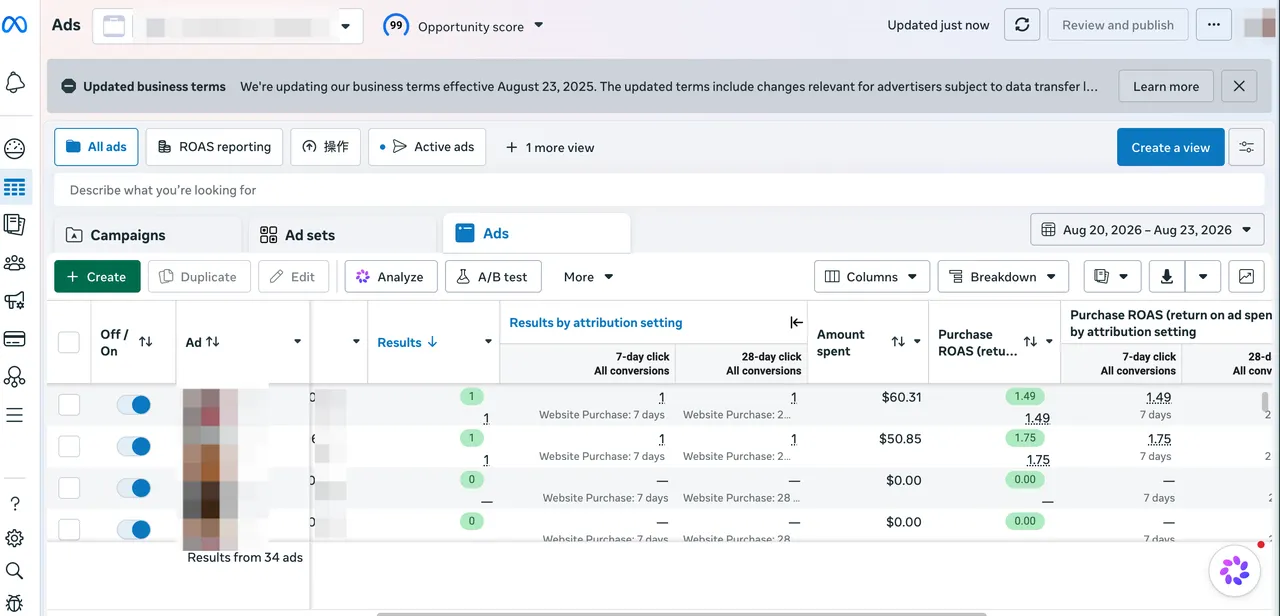
4. On the ad data page, a colored badge with a number appears on the metric columns of the Facebook report. The number is Shoplazza's own data for that column, and the color of the badge indicates the current health status of that data.
- Red — Configuration error: The column setup or display on the report page is incomplete, and the badge data is unavailable. Adjust the column order as described above and make sure the key columns stay within the visible area.
- Orange — Potential risk: Check your UTM settings for each line and review your Pixel status.
- Green — Healthy: Both the page configuration and the data pipeline are working properly. You can use the number directly to compare against the Facebook report.
For example (Red/Green status)
5. Facebook Data Assistant reads the UTM parameters carried by your store's order sources and attributes each order to the corresponding Facebook campaign, ad set, and ad. So you can identify exactly which ad brought in the order and where to optimize.
Checklist
Before reviewing your data, check the following items in order.
Extension version and time settings
- Your Facebook Data Assistant extension is updated to the latest version.
- The time zones of your Facebook Ads Manager, your Shoplazza admin, and your computer are identical, and the date ranges you compare on both sides are the same.
UTM parameter setup
- The UTM parameters tracked in Facebook Ads Manager must be complete. utm_campaign, utm_adset, and utm_ad are the three parameters used by Facebook Data Assistant, and each must match the ID of the corresponding campaign, ad set, and ad. If any level is missing, data for that level cannot be matched.
Store and ad account binding
- One Facebook ad account can be linked to only one store. If it is linked to multiple stores, the results of those stores are mixed together in the same ad account and cannot be separated.
- One store can be linked to multiple Facebook ad accounts. The store's results are reported separately in each account.
- If you have already linked ad account A and turned the feature on, and ads in account B also generate results for the same store, those results are attributed to account B once you link it later. No additional setup is required.
When tracking takes effect
- Facebook Data Assistant can add UTM parameters to both new and existing ads. Tracking starts once the feature is turned on and the URL suffix is added; historical data outside this range will not be matched.
FAQ
Q: Why doesn't the number on the badge match the results in the report column?
For example, the Facebook report shows 10 conversions for ad set xxx, while the green badge from Facebook Data Assistant shows only 2.
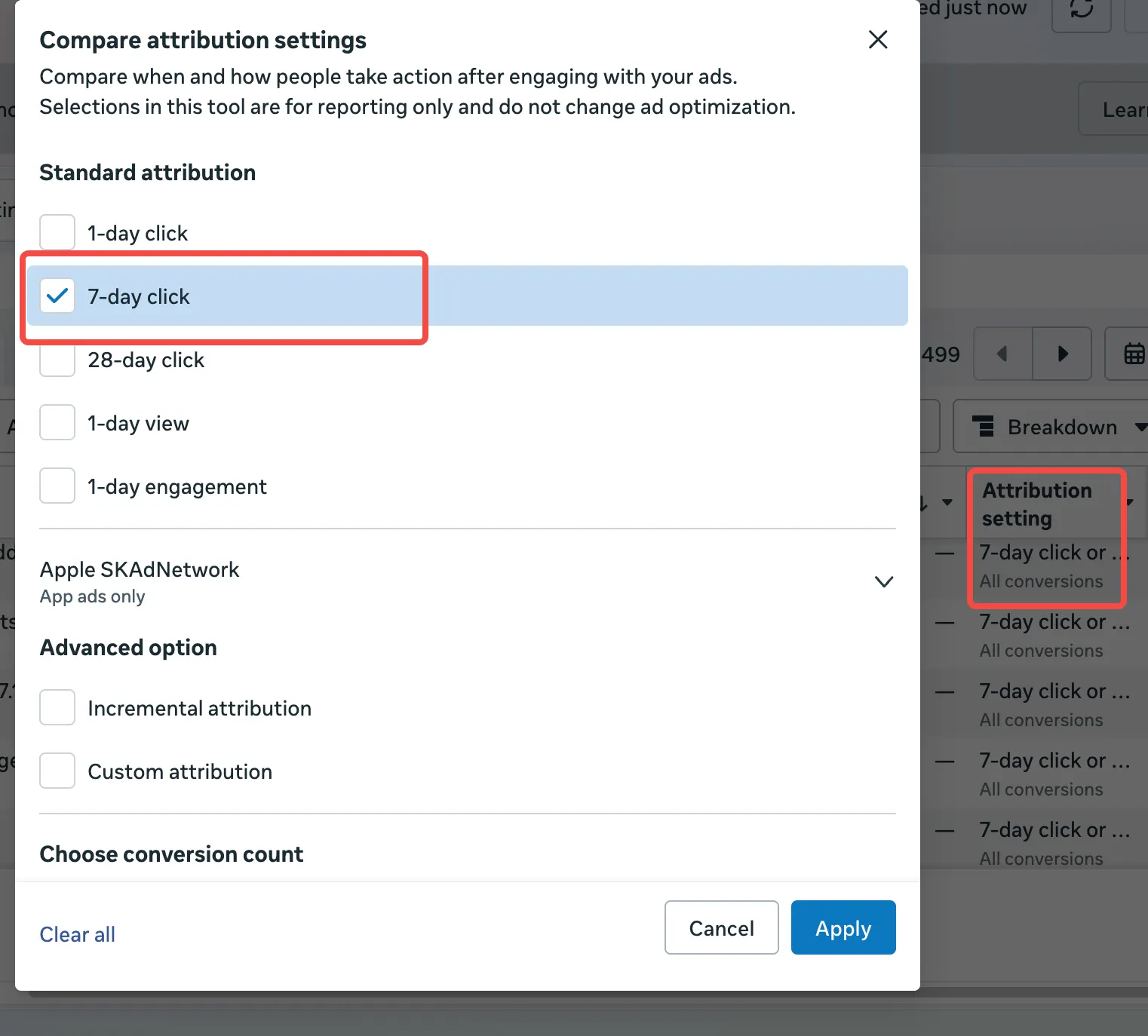
Start by aligning the attribution settings and comparing click-through attribution only. Facebook Data Assistant returns data from shoppers who actually clicked the ad and landed on your store, whereas Facebook results also include view-through and engaged-view attribution. The two are measured differently.
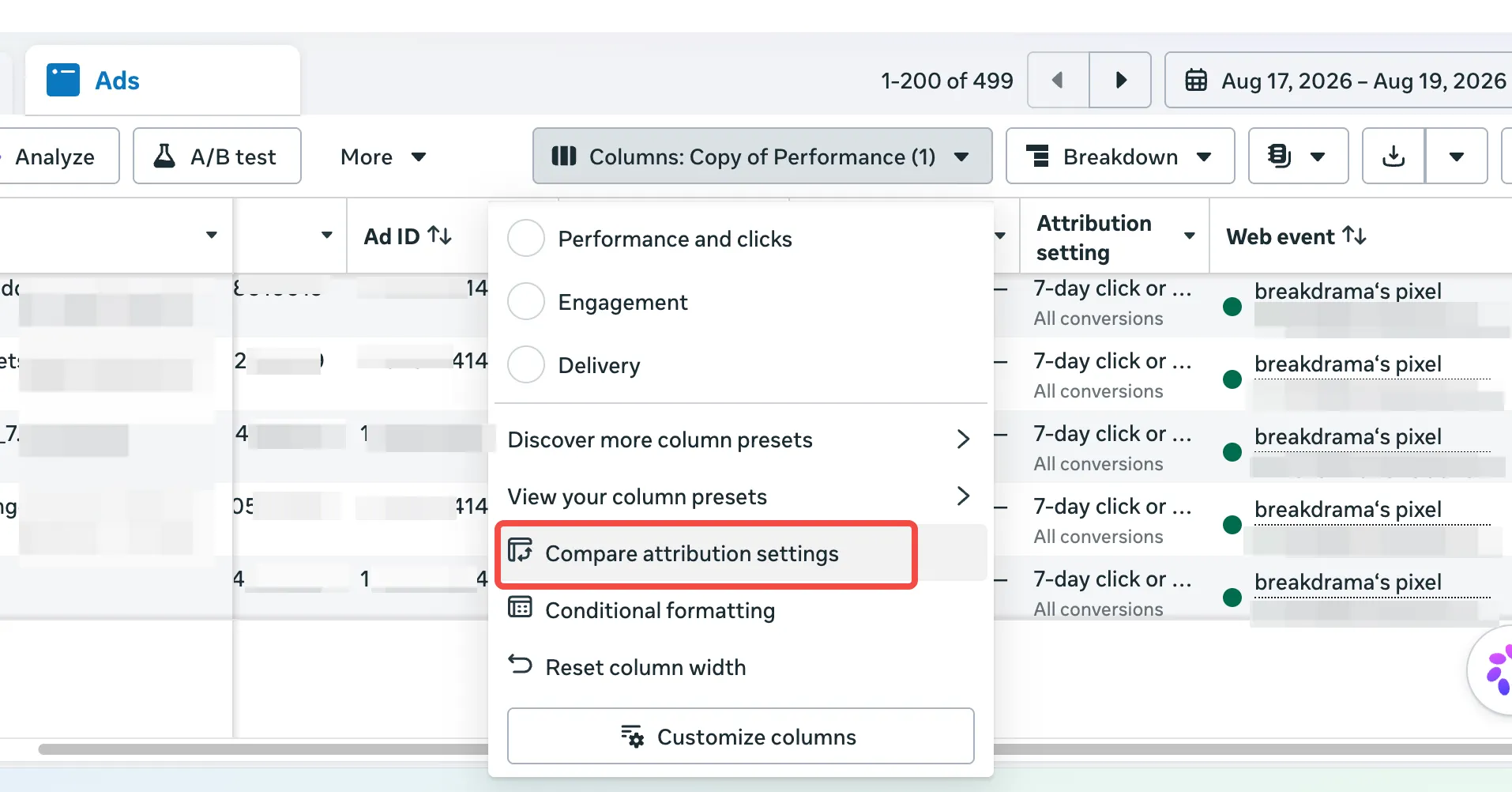
To view click-through attribution only, click Columns in the top-right corner of the report page, then select Compare Attribution Settings at the bottom of the drop-down menu (in the same group as Conditional formatting and Reset column widths). From there, choose the attribution setting and window that match the ad set's own attribution setting.
【Example:Columns → Compare Attribution Settings 】
Q: I already compared click-through attribution — why do the numbers still differ?
For example, the Facebook report shows 5 click-through conversions for ad set xxx, while the green badge shows only 2.
Once attribution differences are ruled out, the two click data sources still differ by nature: Facebook counts "the shopper clicked the ad", while Shoplazza counts "the shopper clicked and successfully reached the store" (the page loaded properly and carried the UTM parameters). Bounces, failed page loads, and dropped parameters all create a gap.
This gap is a normal result of the two different counting methods. It is affected by landing page speed, network conditions in the regions you target, audience composition, and other factors, so the size of the gap varies from store to store and from ad set to ad set — there is no universal benchmark. We recommend using the two sets of data as follows:
- Do not treat "the two numbers are equal" as the standard for normal. Instead, keep the same attribution setting over time and use the size of the gap as that ad set's own baseline.
- If the gap stays stable for an ad set, the tracking pipeline is working, and you can rely on the badge number to compare ad performance.
- If the gap suddenly widens, or the badge number drops to 0, it is more likely a configuration or pipeline issue. Go back to the checklist above and review your UTM parameters and Pixel status.


Comments
Please sign in to leave a comment.